

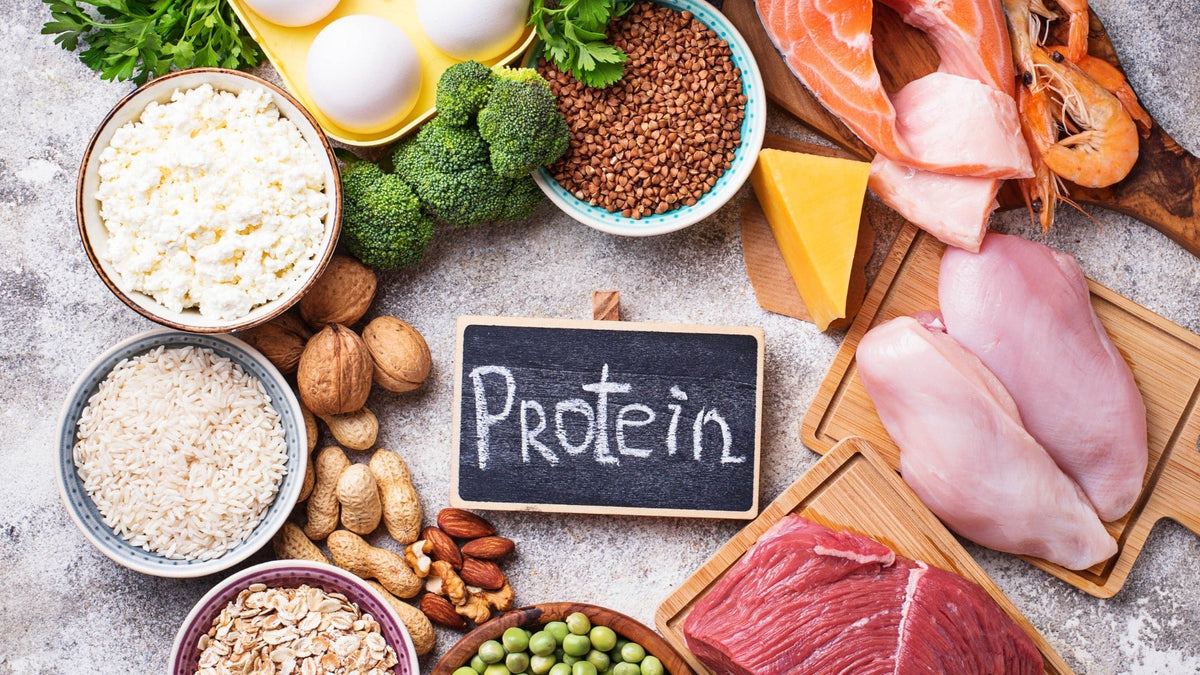
Introduction: Collagen and Protein – Two Proteins, Many Differences
Whether you want to build muscle, strengthen your connective tissue, or simply improve your well-being – proteins play a central role. But protein is not all the same: Two particularly well-known forms are collagen and classic protein (protein powder), such as whey.
Both belong to the protein family, consist of amino acids, and fulfill vital functions. The importance of proteins and amino acids for human health, muscle building, and tissue repair is enormous, as they are essential nutrients that should not be missing from your diet. Nevertheless, they differ significantly in their structure, benefits, and areas of application.
Especially for active women who value a balanced diet and a good feeling about their bodies, it makes sense to know the differences – so they can make informed decisions about when which protein is useful. The topic of collagen and whey protein is also being intensively researched scientifically, particularly with regard to their effectiveness in weight management and muscle building.
What is collagen?
Collagen is the most common protein in the human body – it makes up around a third of the total body protein and is thus the most frequently occurring protein, i.e., the most common protein in the human body. You will find it mainly in:
-
Skin
-
Connective tissue
-
Tendons
-
Ligaments
-
Bones
-
Cartilage
-
Hair and nails
Collagen is an essential component of the body and plays a central role in the stability and structure of various tissues.
Collagen consists mainly of the amino acids glycine, proline, and hydroxyproline, which give the tissue strength, elasticity, and structure. Collagen supplements can contain different components that are processed in the body after ingestion.
The most important collagen types
-
Type I: In skin, tendons, ligaments, bones – most common in the body.
-
Type II: Mainly in cartilage
-
Type III: In skin, vessel walls, internal organs
With increasing age – and under the influence of stress, UV light, or an unhealthy diet – collagen levels drop because the body's own production of collagen decreases. This has a negative effect on the skin, bones, and joints.
Collagen can promote muscle regeneration after training.
In cosmetics, collagen is often used to reduce wrinkles, especially in creams, although it should be noted that such creams cannot directly transport the collagen into deeper layers of the skin. Nevertheless, collagen is an important component of many cosmetic products for skin rejuvenation.
Collagen peptides, obtained through hydrolysis, offer the advantage of better bioavailability and effectiveness compared to conventional collagen. Collagen supplements can therefore be a useful addition to optimally utilize the benefits for skin, joints, and muscle building.
What is protein?
Protein (Eiweiß) is a collective term for a variety of proteins that consist of different amino acids. These proteins are the building blocks for muscles, organs, enzymes, hormones, and the immune system. Protein is composed of various components that can vary depending on the source and processing.
Protein is particularly relevant for muscle building because it provides the building blocks that the body needs after training for the repair and growth of muscle tissue. As an essential building block of the body, protein plays a fundamental role in health. In addition, protein provides important nutrients that are essential for numerous body functions. Protein is considered one of the most important means of supporting muscle building and overall fitness.
Types of protein
-
Animal protein: e.g., in meat, eggs, dairy products, and other foods – usually very high quality. Protein is contained in many foods and can be consumed through a varied diet.
-
Plant protein: e.g., from soy, peas, lentils, quinoa.
-
Whey protein: A particularly fast-acting protein from whey. Whey is obtained from milk by separating the whey and casein during cheese production. Whey protein is also known as whey protein.
-
Vegan protein powders: e.g., from peas, hemp, rice. There are various protein powders that differ in origin, taste, and bioavailability.
Application of whey protein
Whey protein (Molkenprotein) is a well-known dietary supplement in sports. Whey protein is considered a high-quality protein source because it contains all essential amino acids and is well absorbed by the body.
Benefits of whey protein:
-
Can support muscle building
-
Can promote regeneration
-
Provides protein with biological value
The different forms:
-
Whey concentrate: Contains approx. 70–80% protein, plus some fat and lactose – cheaper, but not suitable for those with lactose intolerance.
-
Whey isolate: Very high protein content (over 90%), almost no fat or lactose – ideal for intolerances.
-
Whey hydrolysate: Pre-digested protein, fast-acting – for ambitious female athletes with high demands.
All three forms of whey are part of a comprehensive protein range and can be compared directly in terms of protein content, tolerability, and value for money.
Differences between collagen and classic protein
Before the following comparison of the two types of protein, we would like to point out that collagen – also known as 'collagen' – and whey protein each offer specific benefits. The comparison helps to better understand the differences and areas of application.
|
Property |
Collagen |
Whey/classic protein |
|---|---|---|
|
Function |
Connective tissue, skin, joints, bones, regeneration |
Muscle building, regeneration |
|
Amino acid profile |
Glycine, proline, hydroxyproline |
All essential amino acids |
|
Application |
Skin care, anti-aging, joint protection |
Muscle building |
|
Form |
Mostly powder or capsules |
Powder (shake), capsules |
Overview of the benefits of collagen and protein
Collagen:
-
Can support skin elasticity and can help prevent wrinkles
-
Can support the stability of the joints, tendons, and ligaments
-
Can contribute to injury prevention with regular exercise
-
Can support the connective tissue – ideal for cellulite or sagging skin
-
Can strengthen nails and hair
-
Gelatin is a product derived from collagen that is used in many foods and food preparations such as desserts and baked goods.
-
Collagen peptides and collagen supplements offer particularly high bioavailability due to their hydrolytic processing and can thus effectively support the absorption of collagen in the body.
-
Collagen fibers are crucial for the firmness and elasticity of the skin as well as the connective tissue.
-
Collagen is obtained from animals such as cattle and fish, whose skin and bones serve as a natural source.
Protein (Whey):
-
Can promote muscle building
-
Can support regeneration after training
Integration into the daily diet
Both collagen and protein can be very easily incorporated into everyday life – and that without complicated diet plans or constant calorie counting.
Collagen in everyday life:
-
As a powder in porridge, coffee, or a smoothie
-
Dissolved in water or juice – flavorless or flavored
-
Mixed into soups or stews – heat-stable
-
As capsules for convenient on-the-go use
Tip: The morning is an ideal time for collagen – especially in combination with vitamin C, which promotes collagen synthesis.
Whey protein in everyday life:
-
As a shake directly after training
-
In a smoothie or protein porridge (e.g., with oats, banana, whey, nuts)
-
In baking recipes for protein pancakes or muffins
-
As a supplement if you consume too little protein through your diet on a given day
Tip: Combine whey with high-fiber ingredients for more satiety.
Important notes on intake
Before you start taking dietary supplements such as collagen or protein, please consider the following points:
-
Check quality: Pay attention to purity, origin, and additives.
-
Read the label: Does the product contain sweeteners, flavorings, allergens?
-
Seek advice: If you have health complaints or take medication, speak with a nutritionist or doctor beforehand.
-
Individually adjust requirements: Not every woman needs the same amount of protein – factors such as activity level, age, and goals play a role.
Corridge Collagen – your daily protein boost
Our Collagen Powder is the ideal addition to your everyday life: flavorless, easily soluble, and versatile – whether in a smoothie, porridge, or yogurt.
Corridge Collagen contains pure hydrolyzed collagen protein – without additives, flavorings, or sugar. Each serving provides you with 10 g of high-quality protein that contributes to the maintenance of muscle mass – an important factor, especially if you are physically active or want to eat a balanced diet.
We focus on the highest quality:
✔️ LIAF-certified collagen
✔️ 100 % pasture-raised
✔️ Grass-fed
✔️ Free from steroid hormones, antibiotics, or pesticides
With increasing age, the body's own collagen production decreases. A high-protein diet can support this – for more balance in everyday life. Simply 1–2 tablespoons daily – done.
Important information and contact
Do you still have questions about collagen or want to know how to optimally integrate collagen powder into your diet and fitness routine? Our team at Corridge is here to provide you with expert support.
Conclusion: Both proteins have their place
Collagen and protein such as whey are not competitors, but two building blocks for a strong, healthy, and toned body. While collagen lays the foundation for skin, joints, and connective tissue, whey protein is the turbo for your muscles.
For active women, it makes sense to purposefully integrate both into their diet – for example, collagen in the morning in coffee or porridge, whey as a shake after training. This way, you support your body holistically: beautiful and strong from the inside out.
Still have questions?
Are you unsure which protein best suits your goals? Or would you like to learn more about our collagen products?
Then feel free to write us an email anytime at help@corridge.de – our team will be happy to help you!