


Many people wonder at what age it makes sense to use collagen?
What is collagen and how does it work?
Collagen is a structural protein that plays an important role in the human body. It is the most abundant protein in the body and ensures the firmness and elasticity of skin, bones, joints, and cartilage. Collagen acts like a glue that holds cells and tissues together and gives them their shape and structure. Without sufficient collagen, our skin would lose its firmness, and our bones, joints, and cartilage would also be less resilient. Therefore, it is essential to support collagen production in the body to maintain the health and firmness of these structures.
When is the right time for collagen?
Many women between the ages of 20 and 50 ask themselves the question: When should I start taking collagen? Is taking collagen beneficial from a young age, or only when the first wrinkles become visible? This article highlights how natural collagen production changes from the age of 25 and why it is wise to rely on the use of collagen early on. The Revitaltrax recommendation states that taking collagen from the age of 25 is beneficial to combat collagen loss.
Collagen and the skin: Why is it so important?
Collagen is the most important structural protein of our skin, but it is also essential for bones, joints, and cartilage. Taking collagen can support the regeneration of the skin and intestines and promote the elasticity of connective tissue (cellulite). It can ensure beautiful and firm skin and can strengthen bones, joints, and cartilage. However, collagen production declines with age. This is exactly where the use of collagen as a dietary supplement comes in.
When does collagen loss begin?
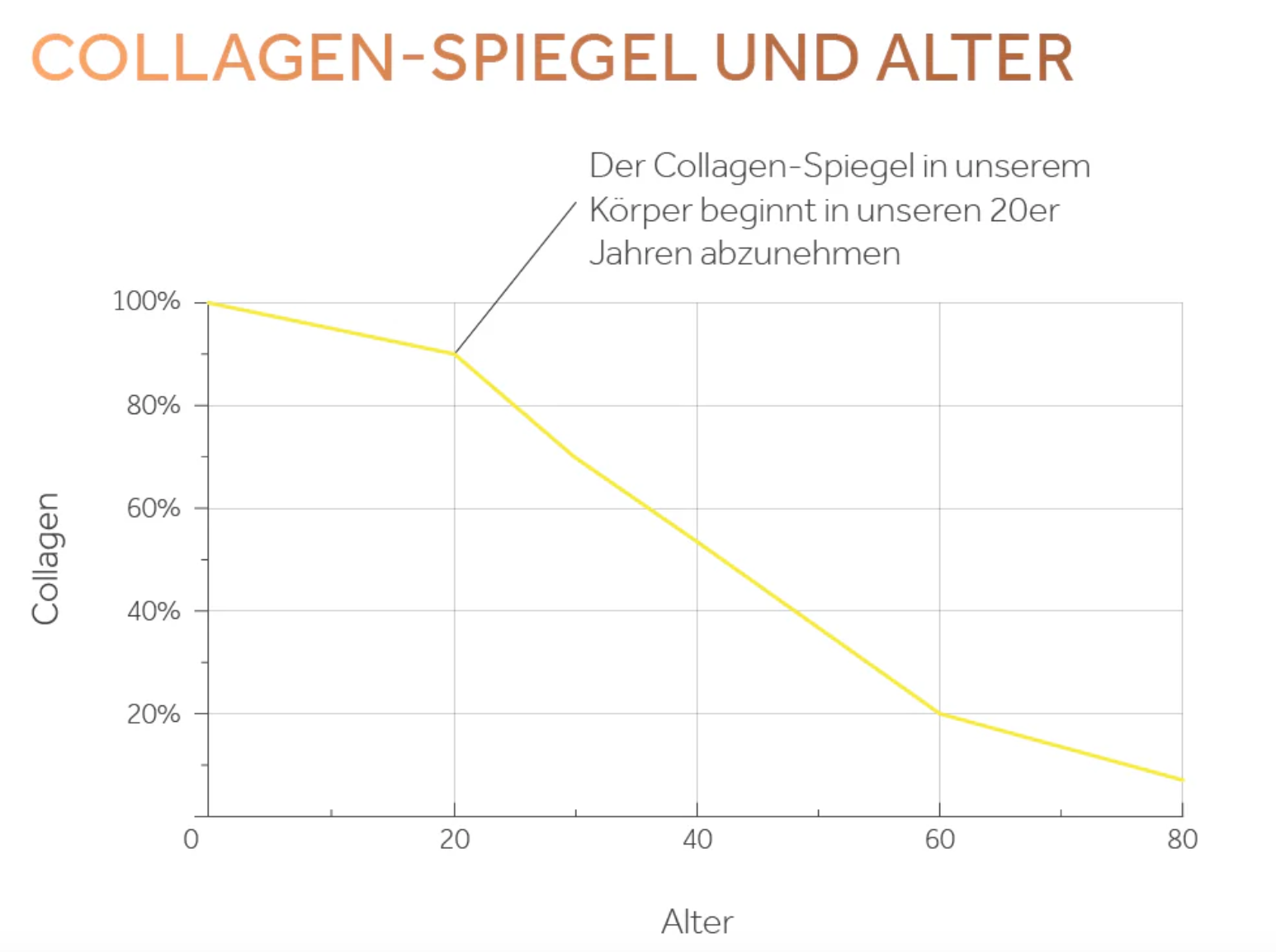
As early as the age of 25, natural collagen production gradually decreases. Studies show that the body produces about 1-1.5% less collagen each year. This process intensifies with increasing age, so that by the age of 40, the skin has already lost around 20% of its collagen. At the age of 60, collagen loss can even amount to 50%. To compensate for this loss, it is recommended to take 1 scoop of collagen per day starting from the age of 40.
But age is not the only factor – external factors can also accelerate collagen breakdown and drive skin aging.
External influences on collagen production
Various lifestyle factors can significantly accelerate natural collagen breakdown:
-
Sun exposure (UV rays): UV rays damage skin cells and lead to increased breakdown of collagen fibers. The result is wrinkles, dark spots, and reduced skin elasticity.
-
Smoking: The toxins contained in cigarettes impair the oxygen supply to the skin and reduce the production of collagen and elastin. This leads to premature skin sagging.
-
Alcohol consumption: Alcohol dehydrates the body and depletes it of important nutrients, which dries out the skin and accelerates collagen breakdown.
-
Poor diet: A nutrient-poor diet with too much sugar and processed foods can promote so-called glycation, a process that can harden and make collagen fibers brittle.
-
Stress: Chronic stress leads to an increase in the stress hormone cortisol, which inhibits collagen production and accelerates skin aging.
-
Pollution: Pollutants in the air can cause oxidative stress, which attacks collagen structures and accelerates the skin aging process.
Why and when should you start collagen supplementation?
Since collagen breakdown begins early and is exacerbated by external factors, early support of collagen production can help keep the skin young and elastic for a long time. Experts recommend targeted collagen supplementation from the age of 25 to 30 to compensate for natural loss and strengthen the skin from within. For women in menopause and seniors from 65 years of age, taking 2 scoops per day is even recommended to reduce skin aging and promote overall well-being.
Collagen in young years: Prevention instead of cure
Early collagen intake can help delay skin aging and physical discomfort. Those who want to add collagen as a supplement benefit from skin with fewer wrinkles, strong nails, hair, and connective tissue. A satisfied Corridge Collagen customer reports: "Corridge collagen is really great. I could notice the effects of collagen after a short time. Firmer fingernails, lots of new baby hairs, radiant and clearer skin, and improved connective tissue on the thighs (cellulite).
I had tried several brands before, but I stuck with this one.
+ Point: Odor- and taste-neutral!
++ Point: regional provider."
When to take collagen? Age-appropriate dosage
Depending on the collagen product, there are different recommendations. For hydrolyzed collagen powder, 1 scoop per day is enough. After operations or injuries, 2 scoops per day can also be supplemented to optimally support the body or healing. Natural collagen production decreases from the age of 25, so taking collagen daily or twice daily at any age, even over 65, can have positive effects on the skin and joints.
Collagen powder: A suitable form of intake
Collagen powder is a popular form of collagen intake because it is easy to dose and consume. It can be easily mixed with water or other drinks and is thus a practical way to integrate collagen into the daily diet. For people who have difficulty swallowing capsules, collagen powder offers an excellent alternative. In addition, collagen powder can be easily stirred into smoothies, yogurt, or other foods, making daily intake even easier. Corridge Collagen is flavor-neutral, heat-resistant, and dissolves perfectly.
Collagen and joint health
Collagen plays an important role in joint health, as it strengthens the cartilage and ligaments in the joints and maintains their elasticity. Regular collagen intake can improve joint health, leading to a reduction in pain and discomfort. Collagen supports the regeneration of cartilage and ligaments and helps improve joint mobility. Especially for people who suffer from joint discomfort or want to strengthen their joints preventively, taking collagen is a sensible addition.
What does collagen really do?
Regular collagen supplementation can bring many benefits:
-
Can reduce physical (joint) discomfort
-
Can make skin firmer
-
Can promote gut health
-
Can strengthen bones, joints, and cartilage
Regular intake of collagen supports the regeneration of the skin and intestines and improves the elasticity of connective tissue. For optimal results, it is recommended to take collagen twice daily.
Corridge Collagen Powder: The best choice for your well-being
The Corridge Collagen Powder contains high-quality hydrolyzed collagen that is quickly absorbed by the body. It is free from added sugar and unnecessary additives, making it ideal for a conscious diet. Thanks to its absolute flavor neutrality, it can be easily mixed into smoothies, coffee, or water.
Quality features of Corridge Collagen Powder:
-
Contains Type 1 and Type 3 collagen, which is particularly important for skin, hair, nails, connective tissue, bones, and joints
-
Neutral taste – can be easily mixed into coffee, smoothies, or water
-
Perfect solubility and heat resistance - ideal for integration into everyday life
-
High-quality composition without unnecessary calories
-
LIAF-certified hydrolyzed collagen powder from beef from pasture-raised cattle with grass feeding – guarantees the highest standards of animal welfare and husbandry
-
Rich in proteins - 91g protein per 100g - which can stimulate metabolism and help with weight loss
-
Rich in amino acids that the body cannot produce itself, such as glycine and proline
How to take collagen powder?
Collagen use is flexible. Here are some options:
-
In the morning in coffee or tea: An easy way to incorporate collagen directly into your morning routine.
-
In smoothies or yogurt: Add a scoop of collagen to your smoothie or yogurt to increase your daily protein intake.
-
In soups or porridge: Collagen can be easily stirred into warm dishes like soups or porridge without affecting the taste.
-
As a shake after sports: Perfect for muscle and joint recovery after a workout.
-
In baked goods: Collagen can be incorporated into pancakes or protein bars to provide an additional source of protein.
Collagen and diet: A sensible combination
A healthy diet also plays a major role. Those who eat healthily, drink enough water, and consume nutrients such as Vitamin C and Biotin can further enhance the effect of collagen powder. This optimally supports the body's collagen formation.
Collagen from 30, 40, or 50? Age-appropriate collagen supply
-
From 25: Early use for prevention
-
From 35: Support against the first wrinkles
-
From 45: Intensive collagen supply with Type 1 and 3 against deep wrinkles and physical discomfort
The intake recommendation: Those who rely on Collagen Powder should take it daily to achieve the best results.
In summary: The earlier, the better! The use of collagen is suitable from the age of 25, as natural collagen production decreases from this age. Those who take collagen daily can prevent skin aging and physical discomfort and enjoy firmer skin with fewer wrinkles.
Corridge Tip: Combine your daily Collagen Powder with Vitamin C and a healthy diet to achieve the best results.
Use of collagen in different life stages
The use of collagen is differently important in different life stages. As early as the age of 25, natural collagen production in the body decreases, which can lead to the first signs of skin aging and other age-related discomforts. Regular collagen intake can compensate for this natural loss and slow down skin aging. Especially during menopause, taking collagen can help regulate hormonal changes in the body and strengthen the skin. This keeps the skin elastic and firm, and the joints and bones also benefit from the additional collagen intake. Regular use of collagen is therefore a sensible addition in every life stage to support health and beauty.
Frequently asked questions about collagen
-
What is collagen and how does it work? Collagen is a structural protein that ensures the firmness and elasticity of skin, bones, joints, and cartilage. It acts like a glue that holds cells and tissues together.
-
How can collagen support the skin and body? Collagen supports the regeneration of the skin, improves the elasticity of connective tissue, and strengthens bones, joints, and cartilage.
-
How should collagen be taken? Collagen can be taken in the form of powder, capsules, or liquid. It can be easily mixed into drinks or foods and should be consumed daily.
-
Who can take collagen? Collagen is suitable for people of all ages, especially from the age of 25, when natural collagen production decreases.
-
How can collagen support the body's own collagen production? By supplying collagen, natural collagen production in the body is stimulated, which leads to improved skin elasticity and stronger joints.
-
Which foods contain collagen? Collagen is found in animal products such as bone broth, fish, and meat. Plant-based sources do not contain collagen but can support collagen production.
-
Which studies prove the effectiveness of collagen? Numerous studies have shown that regular collagen intake improves skin elasticity, reduces wrinkles, and promotes the health of bones and joints.
Corridge Tip: Rely on high-quality collagen - for beautiful skin, healthy joints, and strong connective tissue in every phase of your life.